


Shutterstock
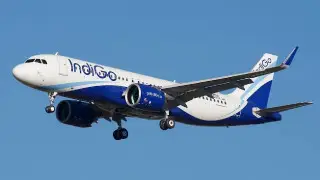
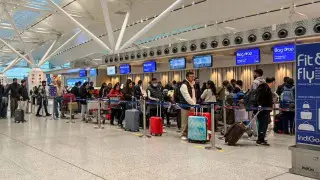
New Delhi: The country's largest airline, Indigo, has been facing a huge operational crisis for the last few days. The result was that more than two thousand flights had to be canceled in just five days. Passengers across the country faced delays, cancellations, and chaos. But the most shocking aspect of this entire crisis is the extent to which IndiGo has a stranglehold on India's domestic air traffic and how one company's problem can jam the entire system.
The situation in India today is that 6 out of every 10 passengers flying on domestic routes travel by IndiGo. There are about 1,200 domestic routes across the country, and IndiGo flights are already available on 950 of these routes. The most serious thing is that among these routes, there are about 600 routes where IndiGo has a complete monopoly; that is, no other airline flies on those routes. Apart from this, there are about 200 routes where only IndiGo and one other airline jointly provide services. Because of this, if IndiGo cancels a large number of flights any day, passengers are left with almost no options. This is the reason why Indigo's problems in the last few days have disrupted the travel plans of millions of passengers.
The Indian aviation sector has seen the closure of several major companies in the last few years—such as Jet Airways and Go First. After the closure of these airlines, IndiGo was left as almost the only big player, which rapidly expanded its network. But this very boom weakened market competition and shook the foundation of a balanced aviation system. Experts say that for any sector to remain healthy, it is necessary to have many strong companies so that passengers get options and the problem of one company does not affect the entire system. The recent crisis of IndiGo is a clear indication that India needs at least 4 to 5 strong airlines in the future.
Not only in aviation, the situation of monopoly is also increasing in sectors like telecom, cement, and steel. The aviation and telecom sectors have crossed 1800 in the HHI index, which measures market share, which is placed in the high-risk category. This indicates that the market equilibrium is continuously deteriorating, and this situation may ultimately prove to be harmful for consumers.
The government is now seeing this crisis as a warning, and it is believed that talks will soon begin on bringing balance in the aviation sector and encouraging new airlines. At present, the only hope that passengers have is that IndiGo should normalize its services soon and also take steps towards increasing options in the market.









Copyright © 2025 Top Indian News


